
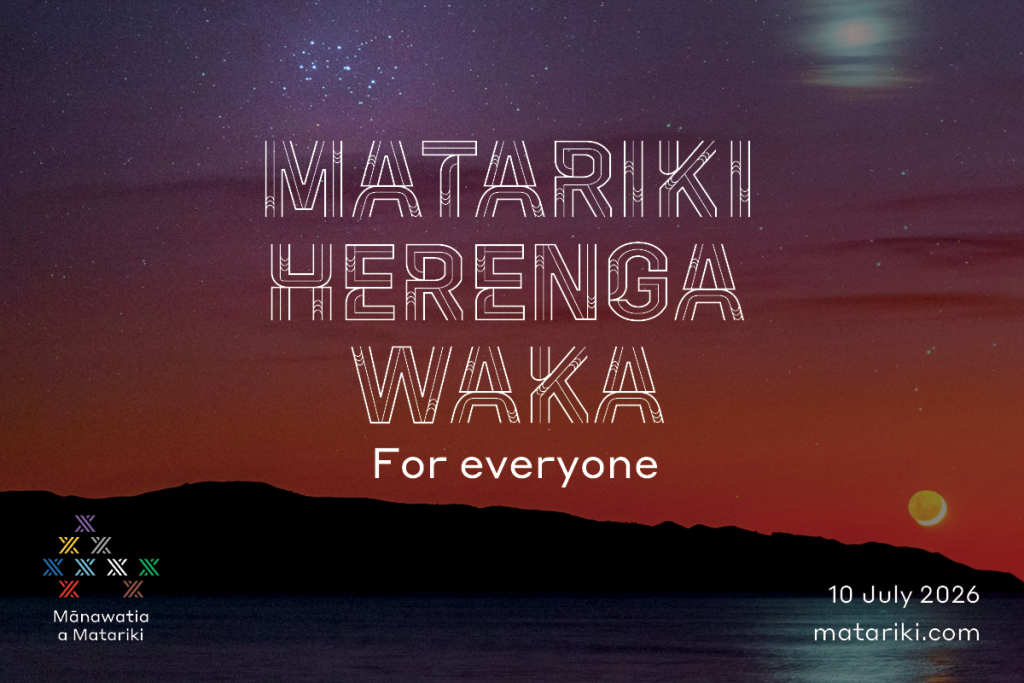
Each year, the rising of the Matariki stars marks the beginning of a new cycle. Across Aotearoa New Zealand, Matariki is a time to remember those who have passed, celebrate the present, and look ahead with hope for the future. It is also an opportunity to reconnect with the natural world and reflect on our relationship with it. While Matariki is often described as the Māori New Year, it is much more than the turning of a calendar. It represents a rich body of mātauranga Māori that has guided communities for generations through careful observation and understanding of the environment. The stars, the maramataka, and the changing seasons all provide knowledge that helps people understand when to plant, when to harvest, when to gather food, and when to allow the environment time to recover. At its heart, Matariki reminds us that people and nature are inseparable. The wellbeing of our communities is closely connected to the wellbeing of our rivers, wetlands, forests, oceans, soils, and atmosphere.
For generations, tāngata whenua have understood these connections, recognising that caring for the environment is inseparable from caring for people. This knowledge has been developed, protected, and shared through a deep and enduring relationship with the whenua and wai. It continues to offer valuable guidance as we work to restore and protect the natural systems that sustain us all.
Learning from the Land, Water and Sky
Long before environmental monitoring equipment or satellite imagery existed, Māori observed the world around them with remarkable detail. The arrival of Matariki was one part of a much larger environmental knowledge system. Decisions were informed by observing the stars, the phases of the moon, rainfall, winds, river conditions, bird behaviour, flowering plants, and many other natural indicators known as tohu. Together, these observations helped communities understand seasonal change and respond to the needs of their local environment. Every landscape is different, and so too are the environmental signs that guide each community. Maramataka and seasonal practices vary between iwi and hapū because they are shaped by local ecosystems and generations of place-based knowledge. The environmental knowledge that Matariki represents has been developed, protected, and shared by Māori over countless generations through a deep and enduring relationship with the whenua and wai. As environmental practitioners, it shows us the importance of listening to and learning alongside mana whenua, whose knowledge and connection to place continue to enrich the way we understand, restore, and care for our natural environment.
This reminds us that effective environmental management begins with understanding the unique characteristics of each local landscape. Every catchment, wetland, river, and coastline tells its own story.
Guided by the Stars
The nine stars of Te Kāhui o Matariki each represent different aspects of the natural world and our relationship with it.
- Tupuānuku is associated with food grown in the soil.
- Tupuārangi represents food gathered from above the ground, including forests, birds, and berries.
- Waitī is connected to freshwater, including rivers, lakes, streams, and wetlands.
- Waitā represents the ocean and the abundance it provides.
- Waipunarangi is associated with rain and the freshwater that falls from the sky.
- Ururangi represents the winds and atmospheric conditions that influence our environment.
Together, these stars remind us that ecosystems do not exist in isolation. Rainfall influences rivers. Rivers nourish wetlands. Wetlands improve water quality before water reaches our estuaries and oceans. Forests support biodiversity while helping regulate water and climate. Every part of the natural world is connected. This understanding closely aligns with the systems thinking that underpins modern environmental science and catchment management.
The Life Force that Connects Us All
Another important concept closely connected with Matariki is mauri, the life force or vitality that exists within the natural world. When rivers are healthy, wetlands thrive, forests flourish, and biodiversity is abundant, the mauri of those places is strengthened. When ecosystems become degraded through pollution, habitat loss, or climate pressures, their mauri is diminished. Environmental restoration is about more than repairing physical landscapes. It is about supporting the long-term health, resilience, and vitality of the ecosystems that sustain both people and nature. This holistic perspective encourages us to think beyond individual environmental issues and consider the relationships that connect land, water, climate, biodiversity, and communities.
Good decisions begin with listening to the environment.
Looking to the Future with Hope
Matariki is a time for reflection, but it is equally a time for aspiration. The star Hiwa-i-te-rangi encourages us to look ahead, set intentions, and consider the legacy we leave for future generations. As we face growing environmental challenges, including biodiversity loss, declining freshwater quality, and the impacts of climate change, this message has never been more relevant. Restoring wetlands, protecting freshwater, enhancing biodiversity, and working with natural systems are investments in the future. They help build resilient landscapes that can continue to support communities for generations to come.
Working Together for a Healthier Environment
At Syrinx, our work is guided by the belief that healthy ecosystems underpin healthy communities. Every wetland restored, every waterway protected, and every nature-based solution contributes to a healthier environment for people and future generations. While our work is grounded in science and engineering, it is enriched by working alongside mana whenua and learning from their shared mātauranga. This indigenous knowledge, developed through generations of close connection with the natural world, continues to provide valuable insights into caring for the health and resilience of our environment.
We are also inspired by indigenous communities and environmental partners around the world who share a commitment to restoring and protecting natural systems.
This Matariki, we are reminded that caring for the environment begins with observation, grows through understanding and collaboration, and is sustained through collective action. As we reflect on the year that has passed and look towards the future, may we continue to work alongside our indigenous communities and nature, protect the places that sustain us, and contribute to landscapes where both people and the environment can thrive.
Mānawatia a Matariki ✨
Acknowledgement
Syrinx acknowledges the mātauranga Māori shared through the resources and knowledge of Māori and tāngata whenua. We recognise that the understanding of Matariki, maramataka, and the relationships between people and the natural world have been developed and safeguarded through generations Māori and of connection with whenua, wai, and whakapapa.
References
Mānawatia a Matariki
A Māori-led resource exploring the meaning, traditions, principles, and significance of Matariki, including its connections to the natural world and future generations.
https://www.matariki.com
Te Wānanga o Aotearoa: Matariki and Puanga Resources
Educational resources exploring Matariki, maramataka, environmental indicators, and the connections between the stars, seasons, and the natural environment.
https://matariki.twoa.ac.nz/resources-and-activities/